
Local SEO is the work of being the business a nearby customer finds and chooses — in the map pack, in reviews, and now in the AI answer that increasingly sits above both. The checklist for it has not been thrown out. It has been reordered, and two items on it now matter far more than they did eighteen months ago.
Here is the 2026 version, with the evidence for each change.
The short version
45% of consumers now use AI tools for local business recommendations, up from 6% a year earlier (BrightLocal, 2026).
The map pack still appears on 93% of direct local searches — but a question-shaped local search gets an AI answer 92–97% of the time (Whitespark, 2025).
97% of consumers read reviews before choosing a local business, and 68% will only use one rated four stars or higher.
Roughly 60% of what AI answers cite for local questions is third-party sources — directories, review sites, forums — not the business's own site.
What changed in local search?
Two things, and they happened at once.
People started asking AI. BrightLocal's 2026 Local Consumer Review Survey found 45% of consumers now use AI tools for local business recommendations. A year earlier it was 6%. AI is now the third most popular source of local recommendations, behind only Google and Facebook. No other channel in local search has ever grown that fast.
Google started answering. Whitespark's May 2025 study ran 540 local queries across three cities and six industries. Direct, name-the-service searches — "plumber near me" — still produced the familiar map pack 93% of the time. But question-shaped searches — "how much does a repipe cost", "best dentist for anxious kids" — produced an AI Overview on 92% of informational and 97% of hybrid-intent queries.
So local search now has two fronts. The map pack decides who gets the call when the customer already knows what they want. The AI answer shapes the shortlist when they are still working it out. A business that only optimises for the first is invisible during the part of the decision where most of the thinking happens. (If the second front is new to you, start with our post on what AI SEO is.)
Does the map pack still matter?
Yes — this is not a post telling you to abandon Google Business Profile.
The map pack appears on nine out of ten direct local searches, and roughly four in ten local searchers click it (SOCi and RedLocalSEO, 2025, cross-reported). For a plumber, a dentist or a law office, that is still the single highest-converting placement on the internet.
And Google's own data on why a complete profile matters has not changed: customers are 2.7× more likely to consider a business reputable, 70% more likely to visit, and 50% more likely to consider purchasing when the Business Profile is complete.
The striking number is how few businesses have one at all. BrightLocal found only 35% of small businesses have a Google Business Profile. Two in three local businesses are absent from the map pack by default — before anyone talks about optimisation.
What do AI systems cite for local questions?
Mostly not you, and this is the finding that reorders the checklist.
In Whitespark's sample local query, about 60% of the AI Overview's citations pointed to third-party sources — review platforms, directories, Reddit-style forums, Thumbtack-type marketplaces. Around 40% pointed to the businesses themselves.
That ratio tells you where the work is. Your own site matters — it is 40% of the citations — but the larger share of what an AI system says about local businesses comes from what the rest of the local web says about them. A business with a beautiful site and no reviews, no directory presence and no mentions has given the AI system nothing to corroborate.
This is the same pattern that shows up in brand-level studies — we covered the Ahrefs 75,000-brand data in our post on how link building is changing — applied to the local level.
Why reviews are now a ranking factor and a closing argument at once
Reviews used to be a conversion lever: people read them before calling. They still are. BrightLocal's 2026 survey found 97% of consumers read reviews for local businesses, and 41% "always" read them, up from 29%.
The thresholds have risen. 68% will only use a business rated four stars or higher, up from 55% the year before. 31% now demand 4.5 or higher, up from 17%. 92% care about the star rating at all.
What is new is that the same reviews now feed the AI recommendation. When a model summarises "the best-reviewed dentists in Denver", it is reading the review platforms. And the two behaviours reinforce each other: BrightLocal found 97% of consumers double-check AI recommendations against reviews. The AI names you; the reviews confirm you; the call happens. Break either link and it doesn't.
The 2026 local SEO checklist
Reordered by what the evidence says matters now. The old items are still here — lower down.
1. Reviews, systematically. A repeatable way to ask every customer, a response to every review, and the rating displayed where buyers see it. This moved from item five to item one because it now does three jobs: ranking signal, conversion lever, and AI corroboration.
2. Google Business Profile, complete. Every field — categories, services, hours, photos, posts, Q&A. Not half-filled. "Complete" is the operative word in Google's own 2.7× figure.
3. Presence in the third-party sources AI actually cites. The industry directories your customers use, the review platforms that matter in your sector, your chamber or association, the local marketplaces. Not 500 generic listings — the handful that an AI system reads when it answers a question about your category in your area.
4. Consistent name, address, phone and description everywhere. Identical across every listing. AI systems corroborate across sources; a business whose address differs between three directories reads as uncertain, and uncertain businesses don't get named.
5. Location and service pages that answer questions. One page per service and per area you serve, written to answer what people actually ask — cost, timing, what to expect — because question-shaped searches are where the AI answers appear. Never one template stamped across thirty towns.
6. A site that loads and that machines can read. Still on the list, still the foundation. Server-rendered content, working links, a clean heading structure. The AI crawlers behind these answers do not execute JavaScript; content that only appears after scripts run is invisible to them.
7. Monitor the answers, not just the rankings. Fix a dozen local questions a customer would ask — "best [service] in [area]", "how much does [service] cost in [area]" — and run them monthly across Google, ChatGPT and Perplexity. Record who gets named. Your rank tracker cannot see this surface.
Items 1 through 4 are the ones that changed. Items 5 through 7 are the old technical and content fundamentals, with a new reason to do them.
What hasn't changed
Nobody — including us — can guarantee a map-pack position or a star rating. Google decides the first and your customers decide the second. What a local SEO programme can promise is the work: a profile that is complete, reviews earned honestly, listings that agree with each other, pages that answer real questions, and a written monthly account of what moved.
That is what we do under local SEO and "near me" visibility, and it is the same checklist above, run every month.
Not sure whether the AI answers in your area mention you?
That is one of the first things we check. Our written audit covers where you rank in the map pack, what your reviews are doing to your conversion rate, and whether ChatGPT and Google's AI answers name you or a competitor. It's free, and it's a document, not a sales call.
This article is written by
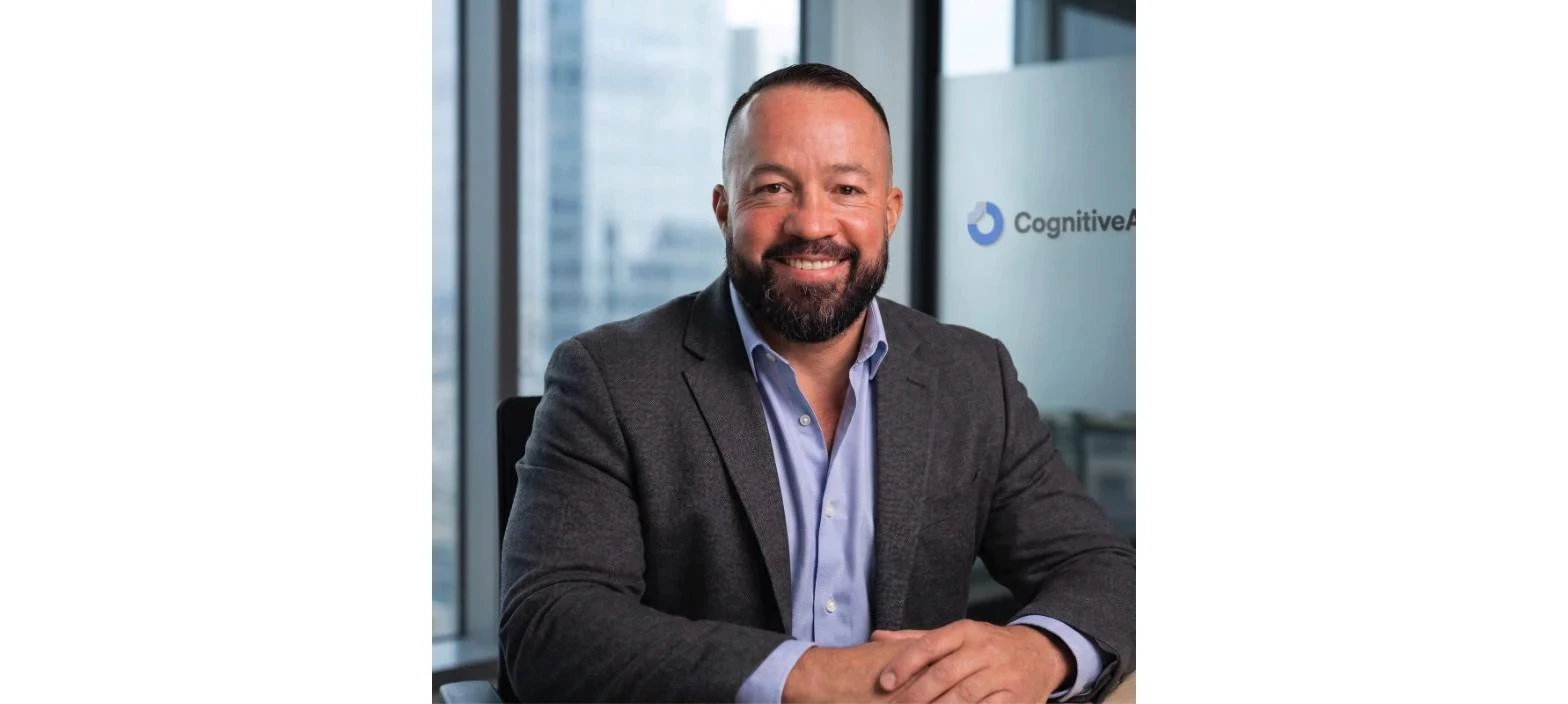
Founder & Lead Strategist at CognitiveAISEO. Marvin Blanco has spent 20 years in digital marketing, helping businesses grow through search. He founded CognitiveAISEO to make sure small and mid-sized brands aren't left behind as AI reshapes how people find information.
Follow on


