
Link building is the practice of getting other websites to link to yours, on the theory that each link is a vote of confidence search engines count. For twenty years it was the core of off-site SEO. It still matters for Google rankings — but the largest study yet of what gets a brand mentioned in AI answers found that being talked about tracks AI visibility about three times more closely than being linked to.
This post is about what that study measured, what it did not, and what a business that has spent years chasing links should do differently.
The short version
Ahrefs measured 75,000 brands. Branded web mentions correlated with AI Overview visibility at 0.664. Backlink count correlated at 0.218.
Roughly a quarter of the brands studied had no AI Overview presence at all.
Separate analyses found that most AI citations about a brand come from pages the brand did not write — 77% in one study of 23,000 citations.
Links are not dead. They are now one signal among several, and no longer the one to organise your whole off-site effort around.
What does "link building" actually mean in 2026?
The old definition still holds: earning hyperlinks from other sites to yours. What has changed is the reason you would want one.
Google's original insight was that a link is a citation, and a page cited by many credible pages is probably worth ranking. That logic built an industry — guest posts, directory submissions, outreach campaigns, and a long tail of paid links that Google has spent two decades trying to discount.
AI answer systems arrived with a different reading habit. When ChatGPT, Perplexity or Google's AI Overview decides which businesses to name in a summary, it is not tallying hyperlinks. It is drawing on everything written about a topic and corroborating across sources. A link helps a crawler find a page; a mention — your name in a sentence, with or without a link — is what tells a model you exist and what you are for.
That distinction is the whole story. If the idea of optimising for AI answers is new to you, our post on what AI SEO actually is covers the basics.
What did the Ahrefs study find?
Ahrefs (Louise Linehan and Xibeijia Guan, May 2025) took 75,000 brands and measured which factors correlated with how often each brand appeared in Google's AI Overviews. The correlations, from strongest to weakest:
Factor | Correlation with AI Overview mentions |
|---|---|
Branded web mentions | 0.664 |
Branded anchor text | 0.527 |
Branded search volume | 0.392 |
Domain Rating | 0.326 |
Referring domains | 0.295 |
Number of backlinks | 0.218 |
Read the top and bottom rows together. The count of pages that mention a brand by name tracks AI visibility three times more closely than the count of pages that link to it. Even "branded anchors" — links whose clickable text is the brand name — sit well above raw backlink count, which suggests the name travelling with the link is doing more work than the link itself.
Two further findings from the same study are worth carrying around:
About 26% of the brands had zero AI Overview mentions. One business in four is simply absent from the surface.
The gap compounds. Brands in the top quartile for web mentions averaged 169 AI Overview mentions. The next quartile down averaged 14. That is not a gentle slope; it is a cliff between the well-discussed and everyone else.
What the study does not say
This is the part most summaries leave out, and leaving it out is how a decent study turns into a bad sales pitch.
Correlation is not causation, and the authors say so. Nobody has shown that going out and acquiring mentions causes AI visibility. Brands that get mentioned a lot are also, generally, bigger, older and better known — all things that would make a model name them anyway. What the data supports is narrower: mentions and AI visibility travel together, and they travel together much more closely than links and AI visibility do.
All of the correlations are moderate to weak. 0.664 is the strongest number in the table, not a strong number in absolute terms. The study is useful for ranking signals against each other, not for promising outcomes.
It measured Google's AI Overviews, not ChatGPT or Perplexity. The other assistants may weight things differently. There is some evidence they do — see the next section.
Anyone quoting the 0.664 figure without those three caveats is selling you something.
Do AI systems cite your site, or sites about you?
Mostly the latter, and this is where the link-building logic breaks most visibly.
Omniscient Digital analysed more than 23,000 AI citations for branded queries and found 77% pointed to off-page sources — pages other people had written about the brand. Only around 23% of citations went to the brand's own domain.
A July 2026 study by Victorious, covering 175 brands across eight AI platforms, pushed the same finding to an extreme: of 49,391 citations during category-research prompts — the "which firms should I consider" questions — 99.99% pointed to third-party sites rather than brand domains.
And in a separate Ahrefs analysis of 15,000 prompts, only 12% of the URLs cited by ChatGPT, Gemini and Copilot appeared in Google's top 10 for the same question. Ranking and being cited are different contests — we go through that study in our post on answer engine optimization.
Put together: when a buyer asks an AI assistant who to consider, the answer is built almost entirely from what the rest of the web says about you. Your own site earns the ranking. Other people's pages earn the recommendation.
A link-building programme is organised around pointing authority at your site. The evidence says the thing to build is the body of material about your business, wherever it lives.
So is link building dead?
No, and anyone telling you so is overcorrecting.
Links still carry weight in Google's ranking systems, and Google's own AI Overviews lean on ranked pages more than the external assistants do. A page nobody links to is harder to crawl, harder to rank and harder to find. Domain Rating and referring domains still appear in the Ahrefs table — lower down, but present.
What has changed is the ordering. Five years ago a sensible off-site plan started with links and treated mentions as a byproduct. The data now supports the reverse: pursue genuine mentions in places that matter, and treat the links that come with some of them as a bonus.
The practical difference is larger than it sounds. A guest post written to carry a link is optimised for the link. A piece of coverage, a directory listing, a podcast appearance or an expert quote is optimised for the mention — your name, your category, what you do, where. The second kind is what both Google and the AI systems can corroborate.
What should a small business do instead?
Four moves, in order of effort.
1. Be listed where your category is actually discussed. Not 500 generic directories. The two or three industry-specific ones your buyers use, your trade association, your local chamber, the review platforms that matter in your sector. Whitespark's May 2025 study of local AI Overviews found about 60% of citations pointed to third-party sources of exactly this kind.
2. Say the same thing everywhere. Name, address, services, the one-line description of what you do — identical across every listing. AI systems corroborate; inconsistency reads as uncertainty, and uncertainty is why a model names someone else.
3. Earn coverage with something worth covering. Your own data, a real point of view, a case worth telling. Editors and podcast hosts decide what gets published, which is why this is the slowest item on the list — and, on the evidence above, the most valuable.
4. Monitor the mentions, not just the links. Most SEO tools report backlinks beautifully and mentions barely. Set up a simple alert on your brand name and keep a log. If the Ahrefs correlation holds, that log is a leading indicator of AI visibility that your rank tracker will never show you.
That is the shape of what we call digital PR and brand citations — earned presence in the places that vouch for you, rather than links acquired for their own sake.
How do you know if it's working?
Not from a backlink count. Two measures, both cheap:
Mention velocity. How many new pages named your business this month, and where. A spreadsheet and a monthly alert review is enough.
The prompt panel. Fix fifteen questions a buyer in your category would actually ask, run them monthly across ChatGPT, Perplexity, Gemini and Google, and record whether you were named, whether you were cited, and who else was. The third column is the one that tells you who is being talked about instead of you.
Give it three to four months. If the mentions climb and the panel moves, the correlation held for you. If the mentions climb and nothing else does, you have learned something the study could not tell you.
Want to know who the AI systems are citing instead of you?
That is one of the first things our written audit checks — where your brand is mentioned across the web and in AI answers, compared with the competitors getting recommended. It's free, and it's a document, not a sales call.
This article is written by
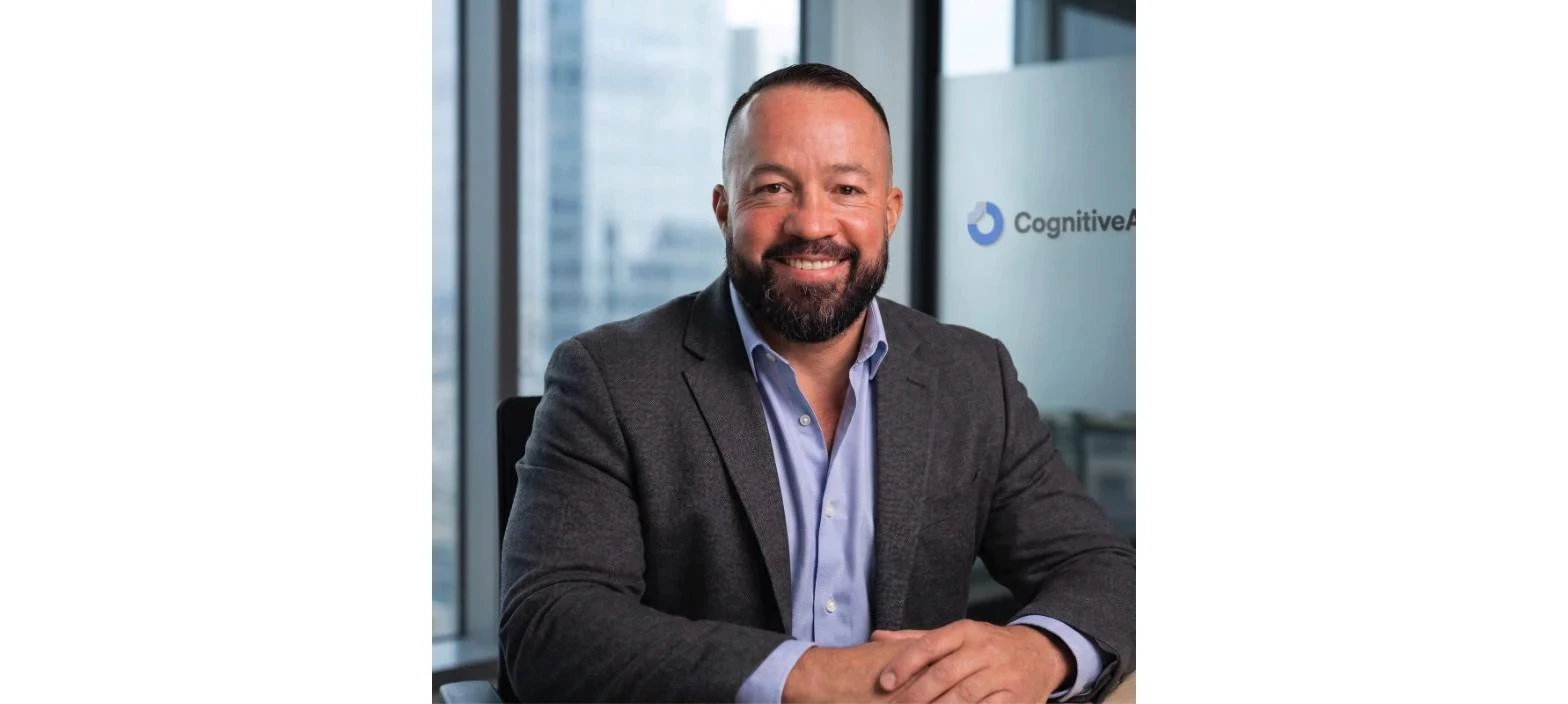
Founder & Lead Strategist at CognitiveAISEO. Marvin Blanco has spent 20 years in digital marketing, helping businesses grow through search. He founded CognitiveAISEO to make sure small and mid-sized brands aren't left behind as AI reshapes how people find information.
Follow on


