
AI SEO is the work of getting your business named and cited inside AI-generated answers — the summary at the top of Google, and the replies people get from ChatGPT, Perplexity and Gemini — instead of only ranking in the list of blue links underneath. It uses most of the same foundations as traditional SEO, applied to a different destination.
That is the whole definition. The rest of this page is what it means in practice, what the evidence actually supports, and what a small business should do about it first.
The short version
AI SEO is not a separate discipline bolted onto SEO. It is SEO, judged by whether a machine repeats your name rather than whether a person clicks your link.
Roughly one in five Google searches produced an AI summary in Pew Research's measurement, and when one appeared, people clicked a regular result about half as often.
The strongest measured correlate of appearing in AI answers is how often your brand is mentioned across the web — not how many backlinks you have.
Most of what is sold as "AI SEO" is either ordinary technical SEO with a new label, or a claim with no evidence behind it. The schema-markup claim is the clearest example.
What does AI SEO actually mean?
Search used to end in a list. You typed something, you got ten links, you picked one. The work of SEO was to be one of those ten.
Increasingly, search ends in an answer. Google puts a generated summary above the links. ChatGPT and Perplexity skip the list entirely and just tell you the answer, sometimes with citations, sometimes without. In either case the question is no longer "did we rank third?" It is "did the machine mention us, and did it get us right?"
AI SEO is the work of making that second thing happen. In practice it splits into two jobs that get separate names in the industry:
Generative engine optimization (GEO) — being included in the answer at all. The system is summarising a topic and deciding which businesses are worth naming. You want to be one of them.
Answer engine optimization (AEO) — being quoted directly when someone asks a specific question your business can answer. The system wants a sentence. You want it to be your sentence.
These are two halves of one job, and you will see agencies sell them as separate products. They are not separate products. Anything that makes you more likely to be named in a summary also makes you more likely to be quoted in an answer, because both depend on the same underlying thing: whether the system has enough clear, corroborated information about you to use you with confidence.
How is AI SEO different from regular SEO?
Less than the marketing suggests, and more than the sceptics admit.
What carries over unchanged: your site has to be crawlable, fast enough, and structured so a machine can tell what each page is about. Your content has to actually answer questions rather than circle them. Your business has to be described consistently everywhere it appears. None of that is new — it is 2015 SEO advice, and it is still the foundation.
What genuinely changes is the unit of success. Traditional SEO optimises for a click. AI SEO frequently produces no click at all: the person gets their answer, forms an impression of who is credible in your category, and moves on. You were either in that answer or you weren't, and your analytics will not tell you which.
That is the uncomfortable part. The measurement you are used to does not cover the surface you now need to win.
How often do people actually see AI answers?
This is where most articles on this subject start inventing numbers, so here is the most defensible measurement available and its limits.
Pew Research Center — which uses a probability-based panel rather than a pool of volunteers, and is therefore the most methodologically sound source in this area — tracked the browsing of 900 consenting US adults across 68,879 Google searches. Around one in five searches produced an AI summary. When one appeared, people clicked a traditional search result in 8% of visits. When one didn't, they clicked in 15%. Clicks on the links inside the AI summary itself: 1%.
Two honest caveats about that figure. First, it is March 2025 data, and AI summaries have appeared on more searches since. Second, higher numbers circulate widely — 43%, 48%, and a badly-sourced 60% that gets repeated everywhere — but those come from vendors measuring their own client keyword sets with undisclosed methods. We would rather quote a conservative number we can stand behind than a dramatic one we can't.
The direction is not in dispute, though. Separately, SparkToro, working from Similarweb's US clickstream panel for January to April 2026, found that 68.01% of Google searches ended without a click — up from 60.45% in 2024. Two-thirds of searches now end where they started.
If nobody clicks, why does any of this matter?
Because a search that produces no click still produces a decision.
Someone asks an AI system which firms in your category are worth talking to. It names three. Your prospect has now shortlisted three businesses without visiting a single website, and you were either on that list or you weren't. There is no impression in your analytics, no session, no bounce rate. The commercial event happened entirely outside anything you can measure by default.
This is why "we get plenty of traffic, we're fine" is a weaker position than it sounds in 2026. Traffic measures the searches that still produce clicks. It tells you nothing about the growing share that don't.
What actually makes an AI system mention your business?
Here is the most useful piece of evidence published so far, and it is worth understanding precisely because it cuts against what most agencies sell.
Ahrefs studied 75,000 brands (Louise Linehan and Xibeijia Guan, May 2025) and measured which factors correlate with a brand being mentioned in Google's AI Overviews. The results, as correlation coefficients:
Factor | Correlation |
|---|---|
Branded web mentions | 0.664 |
Branded anchors | 0.527 |
Branded search volume | 0.392 |
Domain Rating | 0.326 |
Referring domains | 0.295 |
Number of backlinks | 0.218 |
Web mentions correlate three times more strongly than backlinks. Being talked about — named in an article, a directory, a roundup, a forum thread, a local news piece, with or without a link — tracks far better with showing up in AI answers than the link-building metric the SEO industry has organised itself around for twenty years.
Two things must be said about that table, because leaving them out is how this study gets misused. The authors state plainly that correlation is not causation, and that every factor they measured showed moderate-to-weak correlation. Nobody has proven that acquiring mentions causes AI visibility. What the data supports is that the two travel together, more closely than links and visibility do.
One more number from the same study: roughly 26% of the brands studied received zero AI Overview mentions at all. A quarter of businesses are simply absent from the surface. If you have never checked whether you are one of them, that is the single most useful hour you could spend this month.
Does schema markup get you cited by AI?
Less than you'd hope, and it's worth knowing why before you buy it as a deliverable.
Schema markup — the structured data that tells a machine "this is a price, this is an address, this is a review score" — is genuinely useful. It helps search engines display your information correctly, and it's good practice whether or not AI ever enters the picture.
What's less clear is whether it makes an AI system more likely to quote you. The published evidence is thin: one study found no correlation, Google's John Mueller summarised the position in January 2026 as "yes, no, and it depends," and the academic paper most often pointed to didn't test schema at all.
The version of this work we'd stand behind is making your information machine-readable — prices in crawlable HTML rather than trapped in images, factual attributes marked up where markup demonstrably helps, AI crawlers actually allowed through your firewall. That part is well supported. Schema as a citation lever is a bigger claim than the evidence currently carries.
What should a small business actually do first?
In this order:
1. Find out where you stand. Ask ChatGPT, Perplexity and Google the questions a customer would actually ask — "best [your category] in [your city]", "who should I hire for [your service]" — and write down who gets named and which sources get cited. Do it for ten or fifteen questions. This takes an afternoon and tells you more than any tool will. We ran exactly this test across eight US markets for IT providers — six of the eight were not mentioned at all.
2. Fix the foundations before anything else. If your pages are slow, thin, or unclear about what you sell and where, no amount of AI-specific work will compensate. The systems generating these answers are reading the same web everything else reads.
3. Make your business easy to describe. Same name, same address, same service list, everywhere it appears. AI systems corroborate across sources; inconsistency reads as uncertainty, and uncertainty is why a system names someone else.
4. Go and get mentioned. Industry directories, local press, supplier and partner listings, genuine community participation. This is the slowest item on the list and, on the evidence above, the one most worth doing.
5. Answer real questions in public, plainly. Not keyword-stuffed pages — actual answers to the questions customers ask you on the phone. If a system is looking for a sentence to quote, give it a good one to find.
Nothing on that list is exotic. That is rather the point: most of AI SEO is ordinary good practice, done deliberately, aimed at a new destination.
How do you know whether it's working?
Not through your analytics, at least not directly. Build a small habit instead:
Fix a list of 15 questions — the ones a real buyer would type or ask. Write them down once and don't change them, because the value is in the comparison over time. Run them monthly across ChatGPT, Perplexity, Gemini and Google. Record three things each time: were you named, was your site cited, and who else was named.
That log will tell you, within three or four months, whether anything you are doing is moving. It costs an hour a month and no software. If you later buy a tool to automate it, you will already know what good looks like.
Want a second opinion on where you stand?
We run that check for businesses as a written audit — the fifteen prompts, the gaps we find, and what we'd do about them, in priority order. It's free, and it's a document, not a sales call.
This article is written by
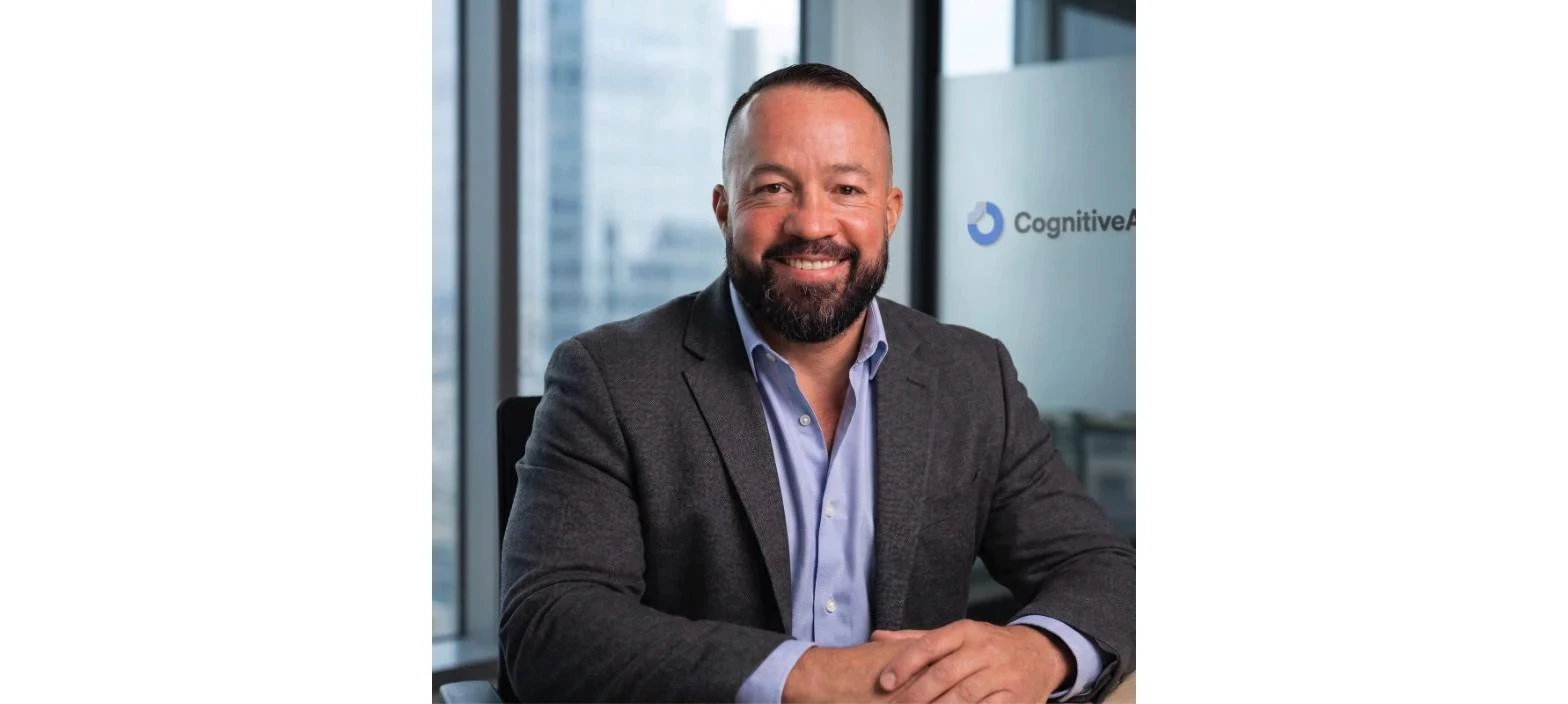
Founder & Lead Strategist at CognitiveAISEO. Marvin Blanco has spent 20 years in digital marketing, helping businesses grow through search. He founded CognitiveAISEO to make sure small and mid-sized brands aren't left behind as AI reshapes how people find information.
Follow on

